Description
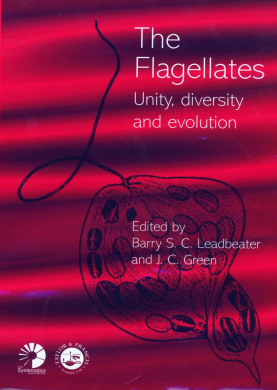
The flagellates are a diverse assemblage of organisms unified by the so-called ‘flagellate condition’. They are ubiquitous and may be, for example, free-living and autotrophic or heterotrophic; symbiotic or parasitic; aerobic or anaerobic. They are of great phylogenetic significance since, on one hand, some of their representatives are among the most primitive eukaryotes living and, on the other, they are ancestral to animals and plants. The Flagellates presents a multidisciplinary view of the flagellates exploring both their unity, in terms of their structure, mechanisms and processes, and their diversity in terms of biogeography, niche colonisation, and adaptations to their environment. In addition, evolutionary relationships amongst flagellates are explored. Leadbeater; Barry S. C. University of Birmingham,Green; John C. Plymouth Marine Laboratory, England, UK,