Description
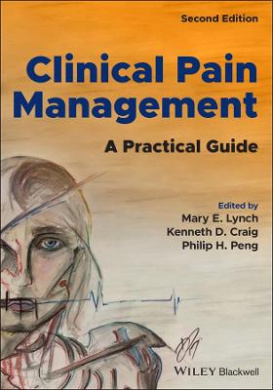
About the Editors Mary E. Lynch, MD, FRCPC, Founder (Pain Medicine) is a Clinician, Researcher and Entrepreneur who has dedicated her career to improving the lives of people living with chronic pain conditions. She is a Professor of Anesthesia, Pain Management and Perioperative Medicine, Psychiatry and Pharmacology at Dalhousie University, Nova Scotia and a Founder of Pain Medicine at the Royal College Physicians and Surgeons, Canada. Kenneth D. Craig, OC, PhD, FCAHS is a Clinician/Scientist focused upon psychosocial features of acute and chronic pain published in over 250 peer-reviewed papers, edited chapters in professional and scientific volumes, and books. He is Professor Emeritus of Psychology at the University of British Columbia. Philip H. Peng, MBBS, FRCPC, Founder (Pain Medicine) is a Clinical Professor in Anesthesiology and Pain Medicine at the University of Toronto. He is a leader, researcher and educator in pain medicine as well as a pioneer in the application of ultrasound for pain medicine. His innovative research led to new procedures in pain intervention. He received numerous international and national awards and was granted the Founder of Pain Medicine at the Royal College Physicians and Surgeons, Canada. He has edited 8 books and published 240 peer-reviewed publications and book chapters. Foreword/ preface Foreword to first edition Part 1: Basic Understanding of Pain Medicine 1 The challenge of pain: a multidimensional phenomenon 2 Epidemiology and economics of recurrent and chronic non-cancer pain 3 Basic mechanisms and pathophysiology 4 Psychosocial Aspects of Pain 5 Identification of risk and protective factors in the transition from acute to chronic post-surgical pain 6 Placebo/nocebo: a two-sided coin in the clinician’s hand 7 Knowledge transfer to patients experiencing pain and poor sleep and sleep disorder Part 2: Assessment of Pain 8 Clinical assessment in adult patients 9 Measurement and assessment of pain in pediatric patients 10 Laboratory investigations, imaging, and neurological assessment in pain management 11 Psychological assessment of persons with chronic pain Part 3: Management 12 Introduction to management 13 Managing chronic pain in primary care 14 Medical nutrition therapy for chronic pain management 15 Physical therapy and rehabilitation Part 4: Pharmacotherapy 16 Antidepressant analgesics in the management of chronic pain 17 Anticonvulsants in the management of chronic pain 18 Opioids 19 Topical analgesics 20 Cannabinoids and other agents 21 Combined pharmacotherapy for chronic pain management Part 5: Interventional 22 Diagnostic and therapeutic blocks 23 Neuromodulation therapy 24 Neurosurgical management of pain Part 6: Psychological 25 Pain self-management: theory and process for clinicians 26 Psychological interventions: a focus on cognitive behavioral therapy 27 Pain catastrophizing and fear of movement: detection and intervention Part 7: Complementary Therapies 28 Complementary and integrative health approaches for pain relief Part 8: Specific Clinical States 29 Low Back Pain 30 Fibromyalgia syndrome and myofascial pain syndromes 31 Clinical pain management in the rheumatic diseases 32 Headache 33 Orofacial Pain 34 Visceral Pain 35 Pelvic and Urogenital Pain 36 Neuropathic Pain 37 Complex Regional Pain Syndrome 38 Cancer Pain 39 Pain and Addiction Part 9: Special Populations 40 Pain in older adults: a brief clinical 41 Pain in Children 42 Pain in individuals with intellectual disabilities 43 Pain and Psychiatric Illness 44 Basic principles in acute and perioperative pain in patients with opiod tolerance Subject index